
Smart Hotel Rooms: Wired vs. Wireless? How to Choose the Best Automation Architecture
GRMS room automation is now a hospitality standard. This guide compares wired and wireless architectures — covering installation timelines, stability, costs, and which system fits your property type.
Smart room automation has transitioned from a high-tech novelty to an industry standard across the hospitality spectrum — from intimate boutique properties to expansive luxury resorts. This guide analyzes wired and wireless systems to help property owners make an informed choice.
With the continuous evolution of hospitality management solutions, smart automation architectures (Guest Room Management Systems — GRMS) are transforming modern hotels. They allow automated orchestration of lighting arrays, climate control (HVAC), motorized blinds, and digital services, fully integrating with in-room IPTV, guest mobile apps, and electronic access control.
However, developers and hoteliers face a critical structural decision during a property build or renovation: Should we deploy a wired or wireless GRMS architecture?
Below, we evaluate both frameworks — analyzing installation velocities, runtime stabilities, long-term operational costs, and deployment scenarios suited for distinct property classifications.
1. Installation & Deployment: Construction Requirements vs. Wireless Agility
Wireless Systems — Fast, Non-Invasive, and Optimized for Renovations
The primary advantage of a wireless smart room architecture is its extreme deployment simplicity. It eliminates the need for chasing walls, running physical conduits, or pulling kilometers of low-voltage cabling through guest rooms.
- Abbreviated Timelines: A property-wide implementation takes days rather than months.
- Non-Disruptive Installation: Minimal noise, dust, or localized structural modifications.
- Continuous Operations: Guest rooms can be upgraded in short phases (e.g., floor by floor) without shutting down property operations.
For instance, a mid-scale corporate hotel updating its legacy guest automation can fully deploy a modern Zigbee-based GRMS within a single business week. The property avoids any vacancy-related revenue drops while guests remain undisturbed. This makes wireless architectures the standard choice for heritage boutique properties, historical conversions, active aparthotels, and rapid brand property refreshes.
Wired Systems — A Permanent Infrastructure Foundation
Wired smart systems represent a deep, structural building investment. Cable management pathways, control cabinets, and low-voltage electrical drops must be engineered during the earliest phases of architectural design, requiring synchronization between structural engineers, commercial electricians, and interior fit-out teams.
The construction loop is significantly longer. If an adjustment is needed later or a core wire suffers damage behind finished walls, remediation is highly labor-intensive and costly. Consequently, wired GRMS configurations are recommended primarily for new construction builds, luxury/premium hotel developments, and complete gut-renovations.
2. Stability & Resilience: Hardwired Consistency vs. Next-Gen Mesh Protocols
Wired (Hardwired) — Premium Enterprise Stability
Wired networks (typically using industrial fieldbus standards like KNX, BACnet, or proprietary RS-485 variants) offer near-zero latency, total immunity to radio-frequency (RF) interference, and bulletproof operational uptimes. Because data packets travel through copper shielding, performance metrics remain perfectly constant regardless of guest traffic or building occupancy. This framework remains the absolute preference for 5-star properties, luxury resort locations, and venues hosting high-level enterprise conferences where system downtime is unacceptable.
Wireless — Massive Advancements through Zigbee, LoRa, and BLE Mesh
While early wireless automation topologies suffered from packet loss and intermittent drops, modern IoT protocols have reshaped wireless reliability. By employing Zigbee 3.0, LoRaWAN, and Bluetooth Low Energy (BLE) Mesh, devices form self-healing network nodes that reroute data dynamically if an intermediary path encounters an obstruction.
While wireless frameworks still demand expert radio-frequency planning and strategic gateway topologies, they execute flawlessly across 80% of standard hospitality environments. Real-world range limitations are typically isolated to legacy properties with massive solid-stone walls, highly saturated urban RF environments, or properties displaying dense physical metal barriers.
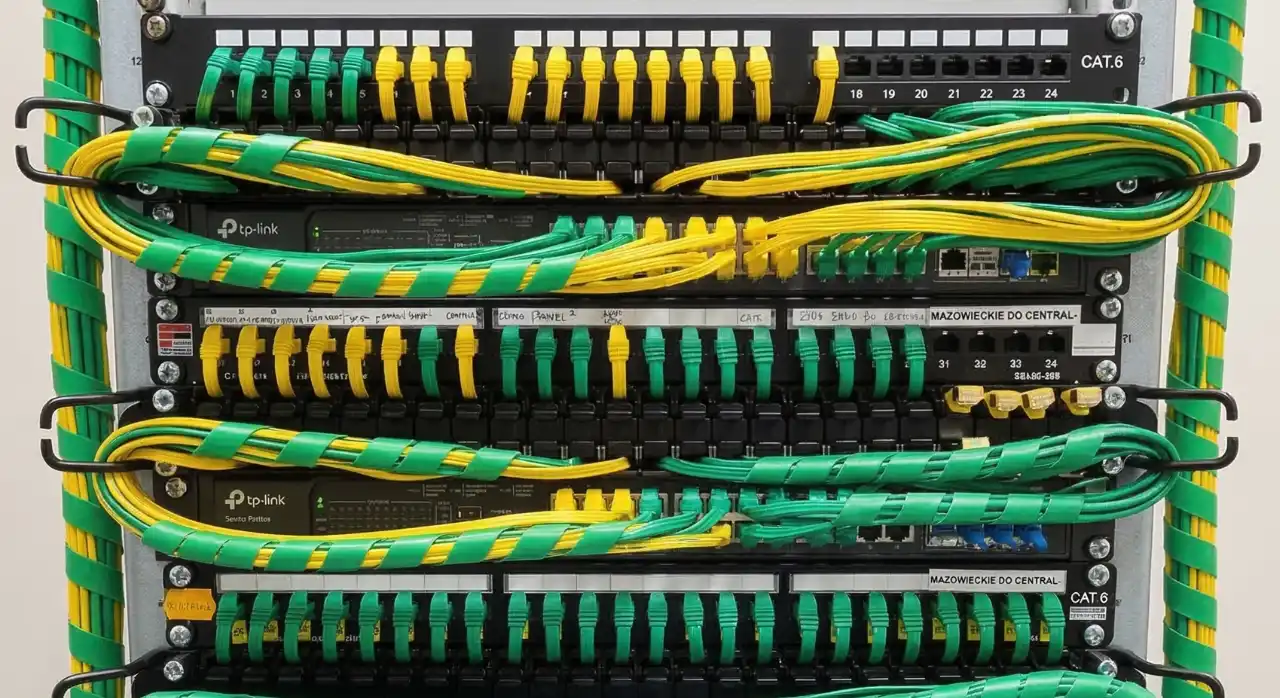
Architecture Comparison Table: Wired vs. Wireless GRMS
| Operational Metric | Wireless GRMS Architecture | Wired GRMS Architecture |
|---|---|---|
| Installation Velocity | Rapid and non-invasive. Zero wall demolition. Ideal for retrofitting operating environments or phased room rollouts. | Requires extensive construction. Chasing walls and pulling conduits are mandatory. Best handled during initial framing or core refits. |
| Optimal Property Type | Active operational upgrades, historical/listed structures, boutique properties, and distributed aparthotels. | New construction projects, Luxury/5-Star resorts, and high-density conference properties. |
| Network Resilience | High reliability via Zigbee/BLE Mesh/LoRa self-healing networks; slight vulnerability to localized RF congestion. | Absolute maximum uptime. Physical data paths entirely eliminate signal attenuation or cross-frequency interference. |
| Upfront Capital Cost | Low initial deployment budget. Drastically reduced labor costs, zero structural repair work, and rapid commissioning. | Higher initial capital investment. Premium cabling assets, hardware control modules, and extended installation man-hours. |
| System Maintenance | Requires periodic battery replacement lifecycle management and wireless node monitoring. | Negligible physical maintenance. Industrial copper bus lines feature operational lifespans spanning multiple decades. |
| Core Conclusion | Maximum operational flexibility and velocity. Ideal for strict capital expenditure budgets and minimized property disruption. | Long-term structural asset value. The ultimate architecture for greenfield builds and ultra-premium hospitality spaces. |
3. Financial Scoping: Upfront CapEx vs. Long-Term OpEx
Wired Configurations — High Initial CapEx, Minimized OpEx
The capital expenditure for wired systems is front-loaded, absorbing the cost of specialized shielded wiring, centralized rail-mounted relays, and heavy manual installation labor. However, once the physical infrastructure is certified, ongoing maintenance expenditures remain exceptionally low, predictable, and stable for decades.
Wireless Configurations — Low Initial CapEx, Managed OpEx
Avoiding heavy copper runs significantly drops your initial installation budget and eliminates property vacancy losses. Conversely, long-term operational maintenance requires clear scheduling: certain sensors and battery-powered locks demand cell replacements every 2 to 4 years, and specific hardware nodes may face faster technology cycles. For mid-scale, economy, and select-service hotel chains, this framework provides the highest overall financial return.
4. Hybrid Topologies: Blending the Best of Both Architectures
An increasing percentage of global hotel developments are abandoning strict binary choices in favor of a hybrid GRMS architecture.
In a hybrid topology, physical cables are run to core, static utilities where downtime cannot be tolerated — specifically central HVAC fan coil units, energy management keycard docks, and primary fire/safety loops. Simultaneously, peripheral guest interactions — such as bedside lighting scenes, motorized drapery control, media panels, and bathroom ambient dimming — are orchestrated via low-power wireless mesh protocols. This combined strategy balances project budgets, preserves future structural modification options, and maintains top-tier guest experience metrics.
5. FAQ — Frequently Asked Questions
Which architecture is better for an older hotel operating inside a historical or listed building?
Wireless is the undisputed choice. Historical and heritage properties feature strict structural protections that ban wall chasing or concrete drilling. Wireless mesh networks allow you to introduce modern luxury room controls without altering the protected architectural fabric of the building.
Do wireless smart hotel systems cause interference with the guest Wi-Fi network?
Not when designed correctly by a professional enterprise integrator. While protocols like Zigbee and standard 2.4 GHz Wi-Fi share the same frequency space, advanced planning clears this hurdle. We configure the wireless GRMS nodes on non-overlapping channels (such as Zigbee channel 11, 15, or 20) while pushing guest Wi-Fi traffic primarily onto the 5 GHz and 6 GHz spectrums (Wi-Fi 6/7), entirely eliminating packet collisions.
How long do batteries typically last in wireless smart room components?
In modern commercial-grade Zigbee 3.0 or BLE components, battery life cycles average 2 to 4 years. This longevity is achieved because the devices remain in a low-power “sleep” state, waking instantly only when a guest interacts with a switch or a sensor registers a state change. Furthermore, the cloud management system automatically alerts hotel maintenance when an individual device drops below 15% power.
Can a wireless system handle advanced climate control (HVAC) integration?
Yes, modern wireless configurations handle full thermostat and valve integrations easily. However, in climates with extreme temperature profiles or where central hydronic HVAC balancing is critical, running a dedicated communication cable to the master fan coil controller is often preferred to ensure uninterrupted safety overrides.
iBeeQ designs and installs smart room automation systems (GRMS) in hotels across Europe. We handle the full scope — network audit, structured cabling, wireless gateway planning, and integration with PMS and IPTV. Contact us for a free initial consultation.
Planning a hotel technology upgrade?
Our engineers have implemented hotel TV and WiFi systems across hundreds of properties in Europe. Let's talk about your project.
Contact us