
Hotel VoIP Telephony: The Complete Guide to Next-Gen Systems
Legacy analog PBX systems are fading. Learn how VoIP works in hotels, what it costs, which systems lead the market, and how to integrate with your PMS.
Legacy analog PBX systems are fading into obscurity. Replacement parts are missing, maintenance costs a fortune, and modern hotel guests expect the high-definition call quality that only modern IP infrastructure can deliver.
For decades, the hospitality communication standard meant a massive server rack with an analog or digital ISDN PBX, kilometers of dedicated copper wiring, and a pricey service agreement with the only local telecom company that still knew how to fix it. Today, this setup presents three crippling issues for property owners:
- No Replacement Parts: Systems manufactured in the 2000s and 2010s have reached end-of-life status. Discontinued hardware components make minor expansion card failures weeks-long nightmares.
- High Operational Overhead: Every extension change, room renumbering, or redirection tweak forces an on-site technician callout.
- Zero System Integration: Legacy telephone systems cannot communicate with modern Property Management Systems (PMS) like Opera, Protel, or Cloudbeds, requiring manual work for guest check-ins, wake-up calls, and telephone bill postings.
VoIP (Voice over Internet Protocol) resolves these issues natively — provided the property’s local network architecture is properly configured.
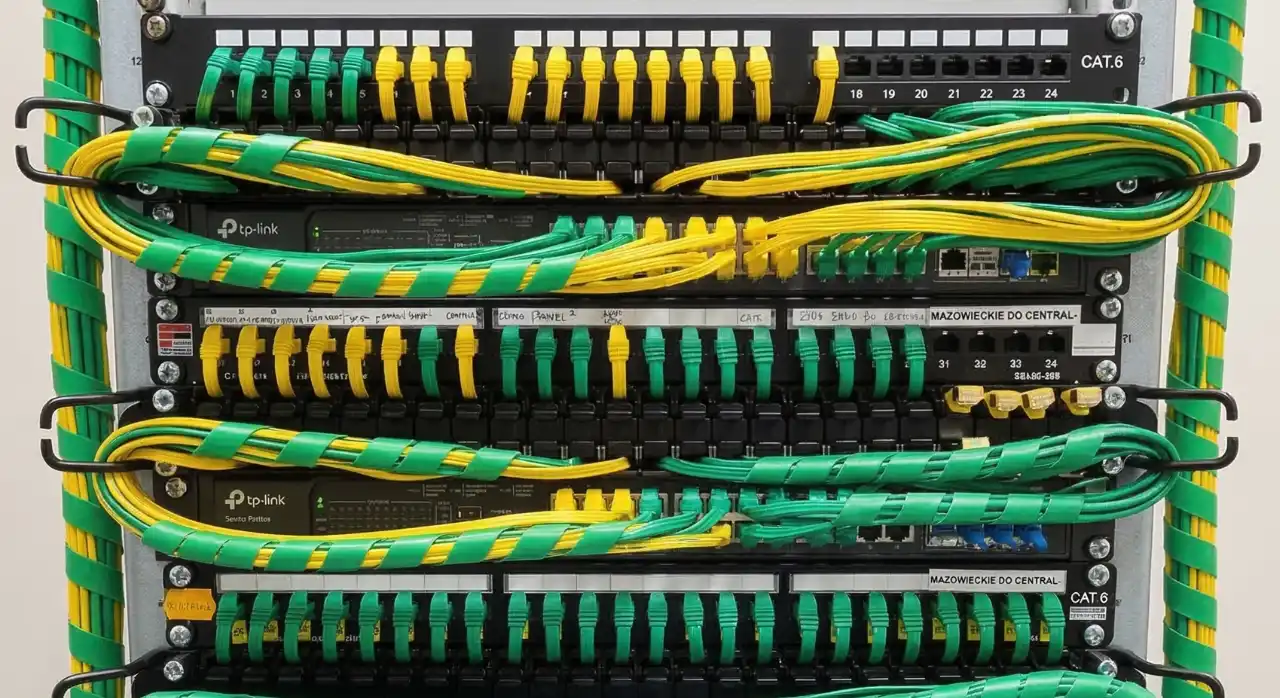
Critical Rule: VoIP operates over your local LAN and the internet. The quality of voice communication is entirely dependent on network quality — bandwidth, packet latency, and strict VLAN segmentations. A property with an outdated network must modernize its switches first before implementing hosted or local VoIP.
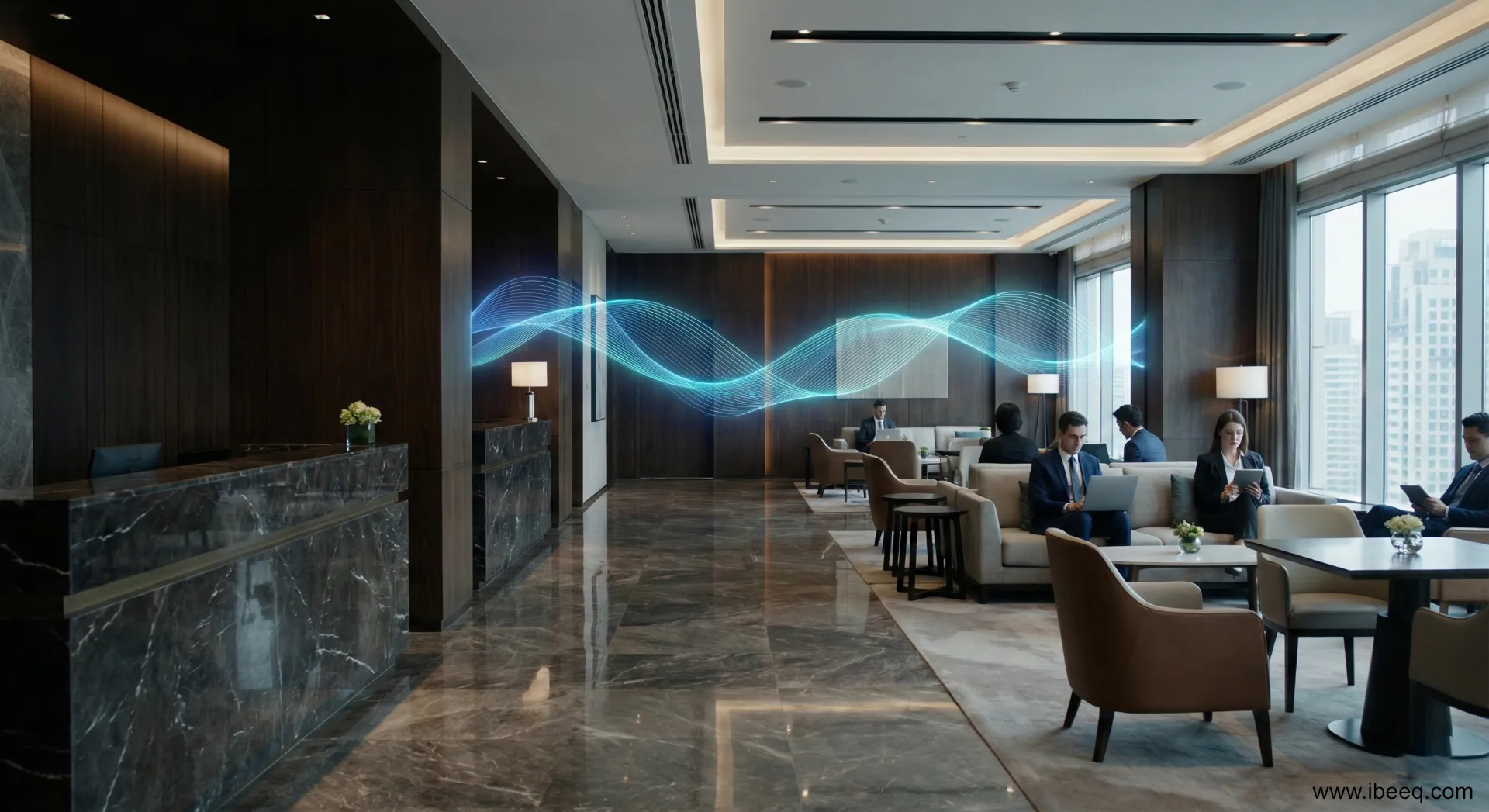
1. System Architecture: How VoIP Operates in a Hotel
A hospitality VoIP system is constructed across several crucial layers:
IP PBX (The Core)
The engine of your communication. It can run as an on-premise hardware server or as a cloud-hosted virtual PBX. It handles all routing configurations, short-number mapping, automated attendant responses, and deep integrations into the PMS.
SIP Trunk
The virtual link between your IP PBX and the external telecommunications operator, completely replacing traditional ISDN copper lines. Instead of renting individual physical lines, the property acquires bundled simultaneous voice channels over internet transit, typically dropping external calling costs by 40% to 60%.
Hospitality IP Phones
Devices deployed in guest rooms and front-desk stations connected via LAN cables or secure WiFi. True hotel-grade IP models include custom hospitality faces: programmable quick-dial keys (Front Desk, Room Service, Spa, Housekeeping) and text fields displaying matching guest information on the reception monitor.
Structured LAN and VLAN Segmentation
VoIP requires a dedicated network slice (Voice VLAN) completely isolated from generic guest data networks and IPTV. Implementing Quality of Service (QoS) rules guarantees clear voice packets even when the property’s wireless network experiences maximum data consumption.
2. Key Hospitality-Specific VoIP Features
What sets a true hotel VoIP system apart from standard corporate office telephone setups is a specialized suite of hospitality capabilities:
- Automated PMS Integration: Upon guest check-in, the PMS automatically provisions the guest-room phone extension, enabling external lines and assigning specific billing rates. At checkout, the line is instantly locked to prevent unauthorized calling.
- Dynamic Guest Data Display: Front-desk operators see the full name, room number, and preferred language of the calling guest on their screen before answering, allowing for immediate personalization.
- Automated Wake-Up Services: Guests schedule wake-up calls directly via their room phones or through the front desk. The IP PBX automatically generates the phone call at the designated time with pre-recorded localized messaging.
- Granular Call Tariffs: The system automatically logs external calls made from guest rooms, calculates costs in real-time based on your parameters, and applies the total directly to the guest’s folio profile.
- DECT Ecosystem Mobility: Housekeeping, maintenance, and security personnel remain reachable across the entire property via lightweight wireless DECT handsets hooked into the central IP PBX.
3. Popular Hospitality VoIP Systems in 2026
Multiple enterprise communication systems have proven reliable in demanding hotel environments:
| System Platform | Target Scope | PMS Integration Capabilities |
|---|---|---|
| 3CX | Hotels with 20 to 500+ rooms | Deep native support (Fidelio, Protel, roomMaster) |
| Yeastar P-Series | Hotels with 50 to 300 rooms | Granular hotel app extensions and PMS bridges |
| Grandstream UCM | Small to mid-size boutique properties | Flexible integration via SIP and custom REST APIs |
| Asterisk / FreePBX | Large enterprise / Custom infrastructure | Open-source foundation, requires dedicated IT team |
Our Recommendation: For properties under 100 rooms operating without an on-site IT team, a cloud-hosted instance of 3CX or Yeastar represents the best path forward. It eliminates local server hardware maintenance, provides automatic software security upgrades, and significantly reduces the initial entry cost.
4. Financial Investment: What Does a Hotel VoIP Implementation Cost?
Total budgets are determined by three main variables: room count, system deployment type (cloud vs. local), and the existing state of your network switches.
| Property Capacity | Average System Cost (Hardware/Setup) | Operational Notes |
|---|---|---|
| Up to 30 Rooms | €1,800 – €4,500 | Simple local gateway, baseline IP phones, standard setup |
| 30 to 100 Rooms | €4,500 – €13,500 | Centralized PBX, integrated DECT for staff, full PMS sync |
| 100 to 300 Rooms | €13,500 – €34,000 | Multi-server redundancy, high-density hospitality hardware |
| Above 300 Rooms | Custom Individual Pricing | Architectural scoping, customized API bridges, failovers |
Note: Budgets exclude new physical data cable drops and monthly SIP Trunk channel fees (typically ranging from €12 to €50/month depending on required concurrent call capacities).
5. FAQ — Frequently Asked Questions
Can we keep our existing analog guest-room phones during a VoIP upgrade?
Yes. By implementing high-density FXS gateways (such as Grandstream or Cisco devices), you can connect your existing analog room phones directly to a modern IP PBX. This is an excellent cost-containment strategy for large properties, allowing a staged transition where you upgrade the core system now and replace room phones gradually.
What happens to the phone system if the property’s main internet connection drops?
All internal property communication (Room-to-Reception, Reception-to-Kitchen, Emergency dialing) runs completely over the local LAN and continues to operate smoothly without internet access. Only external outbound and inbound calls via the SIP Trunk require internet connectivity. Implementing a secondary low-cost 5G/LTE failover gateway completely mitigates this risk.
Is it recommended to run hotel guest-room IP phones over WiFi?
Technically possible, but highly discouraged for fixed-location room phones. Wireless signals fluctuate due to high guest density and wall materials, whereas voice communication is highly sensitive to packet jitter and drops. For stable, crystal-clear communication, running a physical Cat6 LAN cable with Power over Ethernet (PoE) to the desktop phone remains the engineering gold standard.
What is the average Return on Investment (ROI) timeline for an upgrade?
For an average 80-room hotel, eliminating a monthly analog legacy maintenance agreement (which often costs €115 to €350/month) combined with cheaper SIP trunk call tariffs allows the entire implementation to completely pay for itself within 12 to 18 months.
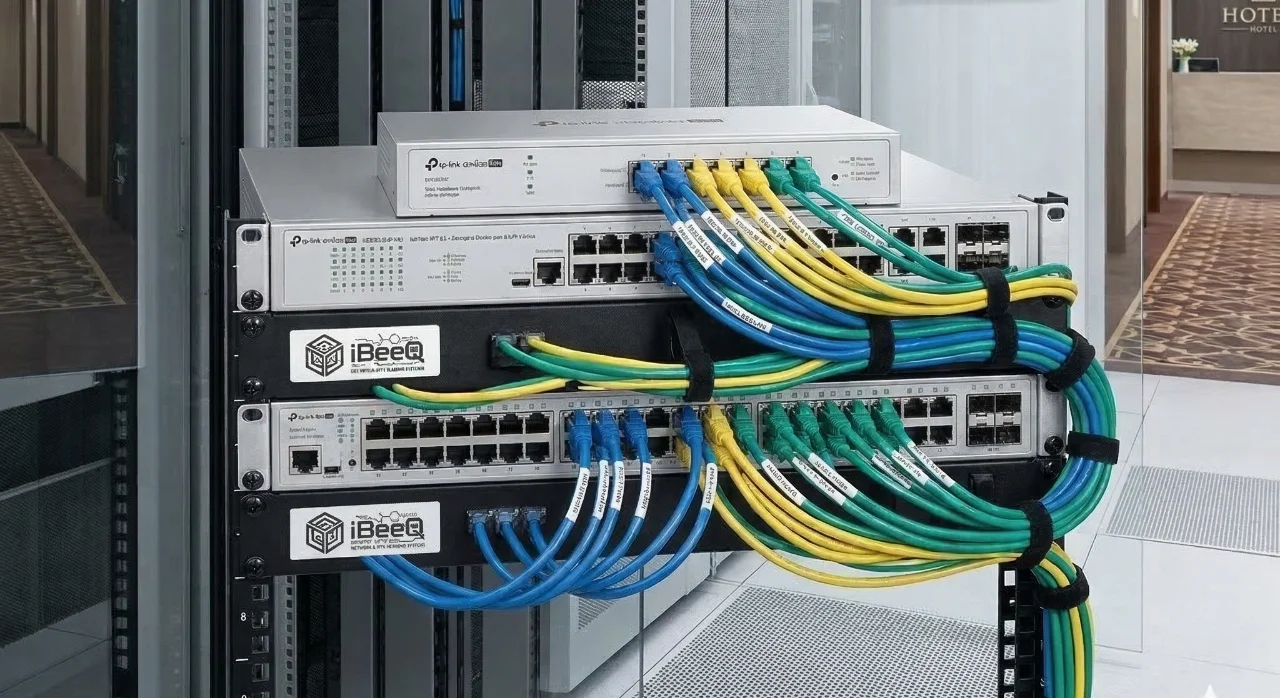
iBeeQ designs and installs VoIP telephony systems in hotels across Europe. We handle the full scope — network audit, LAN infrastructure, IP PBX configuration, and PMS integration. Contact us for a free initial consultation.
Planning a hotel technology upgrade?
Our engineers have implemented hotel TV and WiFi systems across hundreds of properties in Europe. Let's talk about your project.
Contact us