Hotel TV Systems
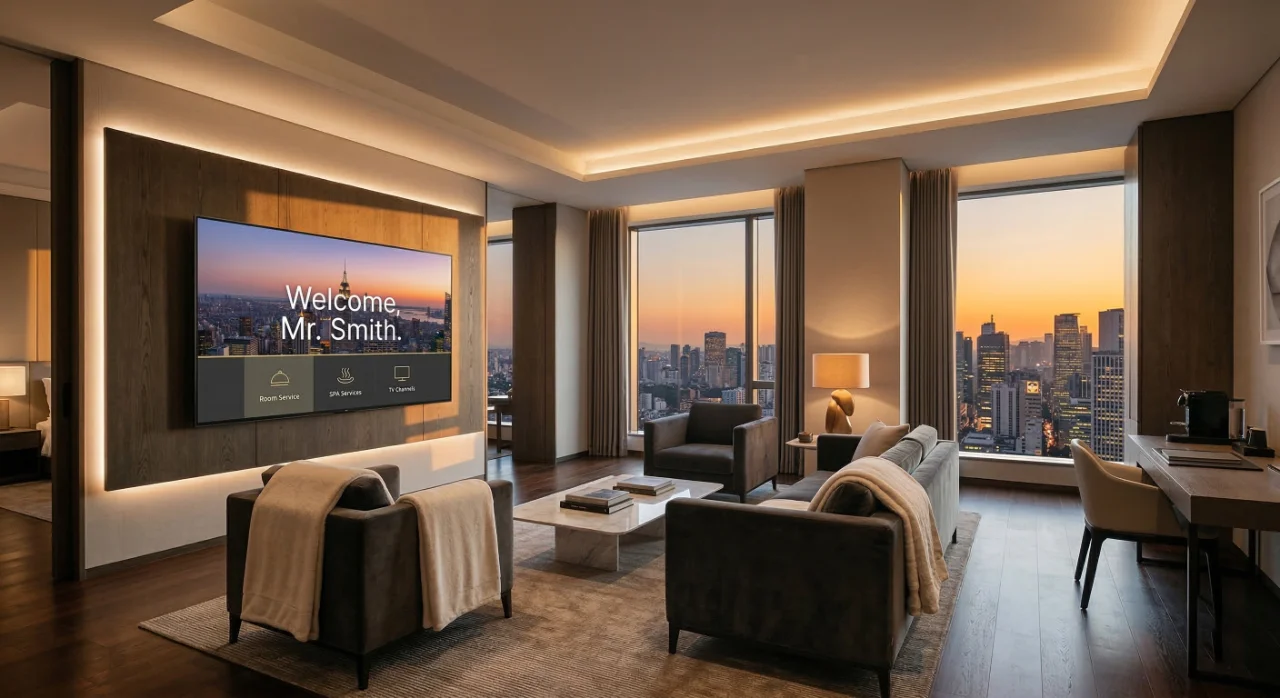
IPTV, casting and VOD tailored to your property's standard. PMS integration, welcome screen with guest name, hotel information, service ordering. We support LG, Philips, Samsung and Vestel platforms.
Learn more arrow_forward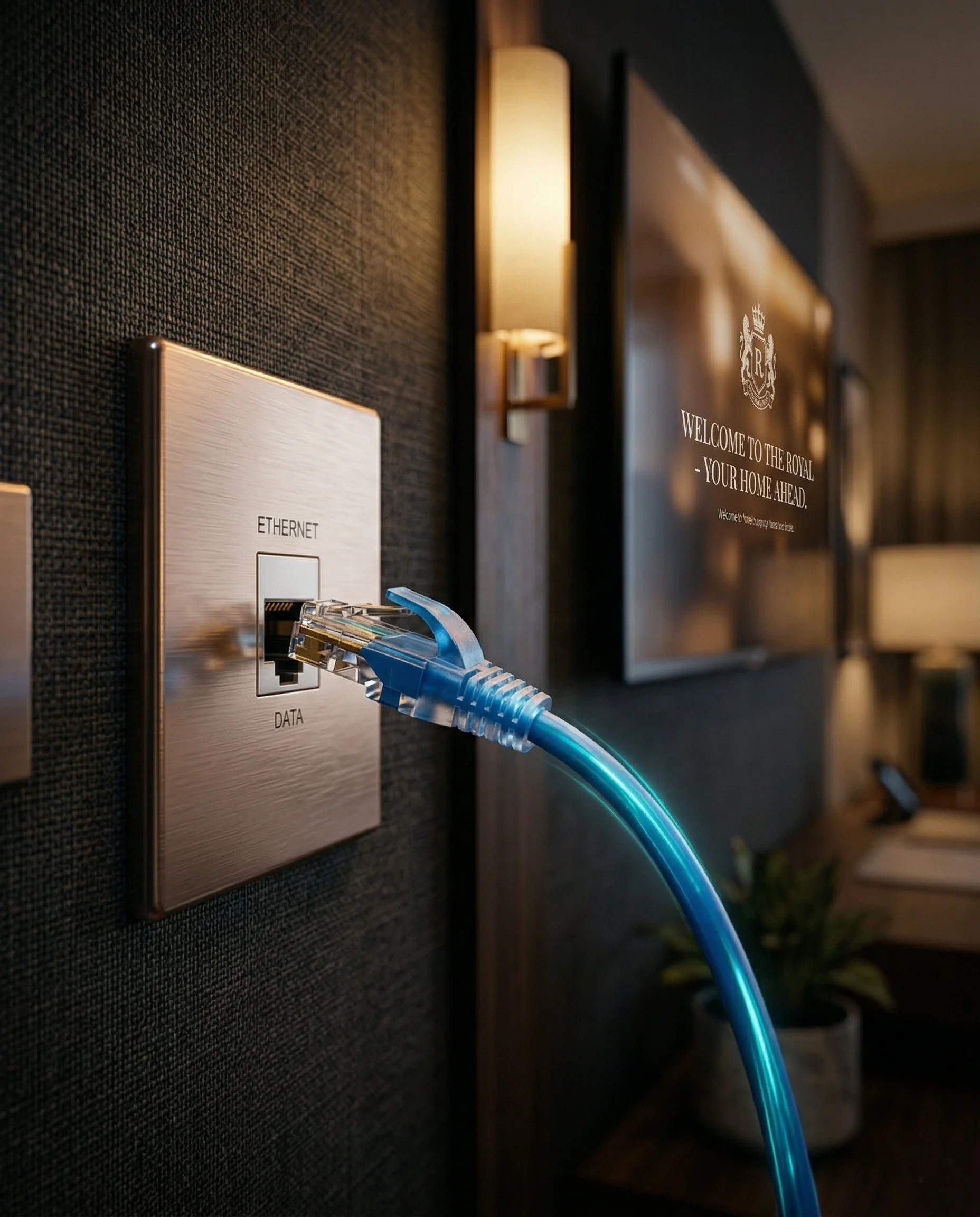
Free analyses
tv_genHotel TV analysis wifi_findWiFi network analysisConfigurators
searchHotel TV finder routerWiFi configurator fact_checkTech readiness audit 2026Calculators
straightenTV viewing distance aspect_ratioTV by niche size zoom_out_mapTV mount height settings_ethernetInternet speed calculatorWe design, implement and support full IT infrastructure for hotels across Europe — Hotel TV, WiFi 6/7, GPON networks, access control and CCTV. One partner, full responsibility.
One partner. One system. Zero chaos in your hotel — from network design to the TV screen in every room.
Our solutions
We build infrastructure that works quietly in the background — from television signals to access control.
IPTV, casting and VOD tailored to your property's standard. PMS integration, welcome screen with guest name, hotel information, service ordering. We support LG, Philips, Samsung and Vestel platforms.
Learn more arrow_forwardProfessional DVB-RF and IPTV headends, multiswitches and structured cabling. TV signal distribution — from 1 to 1000+ rooms.
Learn more chevron_rightChromecast, AirPlay and VOD systems. Guests stream content from their smartphone to the TV in their room — without logging into apps on the television.
Explore arrow_forwardIndustries we serve
25 years of experience across different property types — from boutique hotels to large-scale infrastructure.
Why hotel CMS
5 differences the guest notices — and 5 reasons the hotel benefits.
Traditional TV
Same channels as at home
CMS iBeeQ
Welcome screen with guest's name
Traditional TV
Manufacturer logo on startup
CMS iBeeQ
Your hotel's branding
Traditional TV
Guest can't stream from phone
CMS iBeeQ
Chromecast, AirPlay without login
Traditional TV
Guest unaware of hotel services
CMS iBeeQ
SPA, restaurant, attractions menu
Traditional TV
Change = technician visits rooms
CMS iBeeQ
Remote update of all TVs
Our process
Free analysis of existing infrastructure or project. We identify risks, opportunities and optimal implementation scope. No pressure, no surprise offers.
Detailed technical design with cost estimate and timeline. Documentation ready for investor or hotel group approval.
Installation by our own technical team. Coordination with other contractors, acceptance tests, property staff training.
Service contract, remote support, regular maintenance. We're available when the system needs attention — not only when something breaks.
Online tools
Instead of waiting weeks for a quote, check it yourself — what, how much and why.
— Configurators
Configure your channel package, IPTV system and multimedia features. Result in 3 minutes — no sales call.
Enter the number of rooms, property layout and expected standard. We calculate the required number of access points and estimated budget.
16 questions about your hotel's infrastructure. At the end you receive a PDF report with technology readiness assessment and priority list.
— Search tools
Search the database of 40+ hotel TV models from Samsung, LG, Philips and Vestel. Filter by CMS, DRM, PMS, cast and 30+ other parameters.
Enter the width and height of the niche in the hotel room. You get a list of matching TV models with ventilation clearances.
— Calculators
Enter the number of rooms and expected occupancy. We calculate the required internet bandwidth and recommended connection type.
Enter the TV diagonal and resolution. We calculate the ideal viewer distance from the screen according to SMPTE standards.
At what height should the TV be mounted in a hotel room? The calculator takes into account bed, desk and guest height.
They trusted us







We specialise exclusively in hotel technology. That focus translates into better outcomes for our clients.
Our team has been building hotel technology infrastructure since before iBeeQ existed.
Completed across 6 countries in Europe.
From design through installation to ongoing support — no finger-pointing between vendors.
Remote monitoring and on-call technical support for critical systems.
Book a free 30-minute consultation with our hotel technology expert. Tell us where you are — we'll tell you where it's worth going.